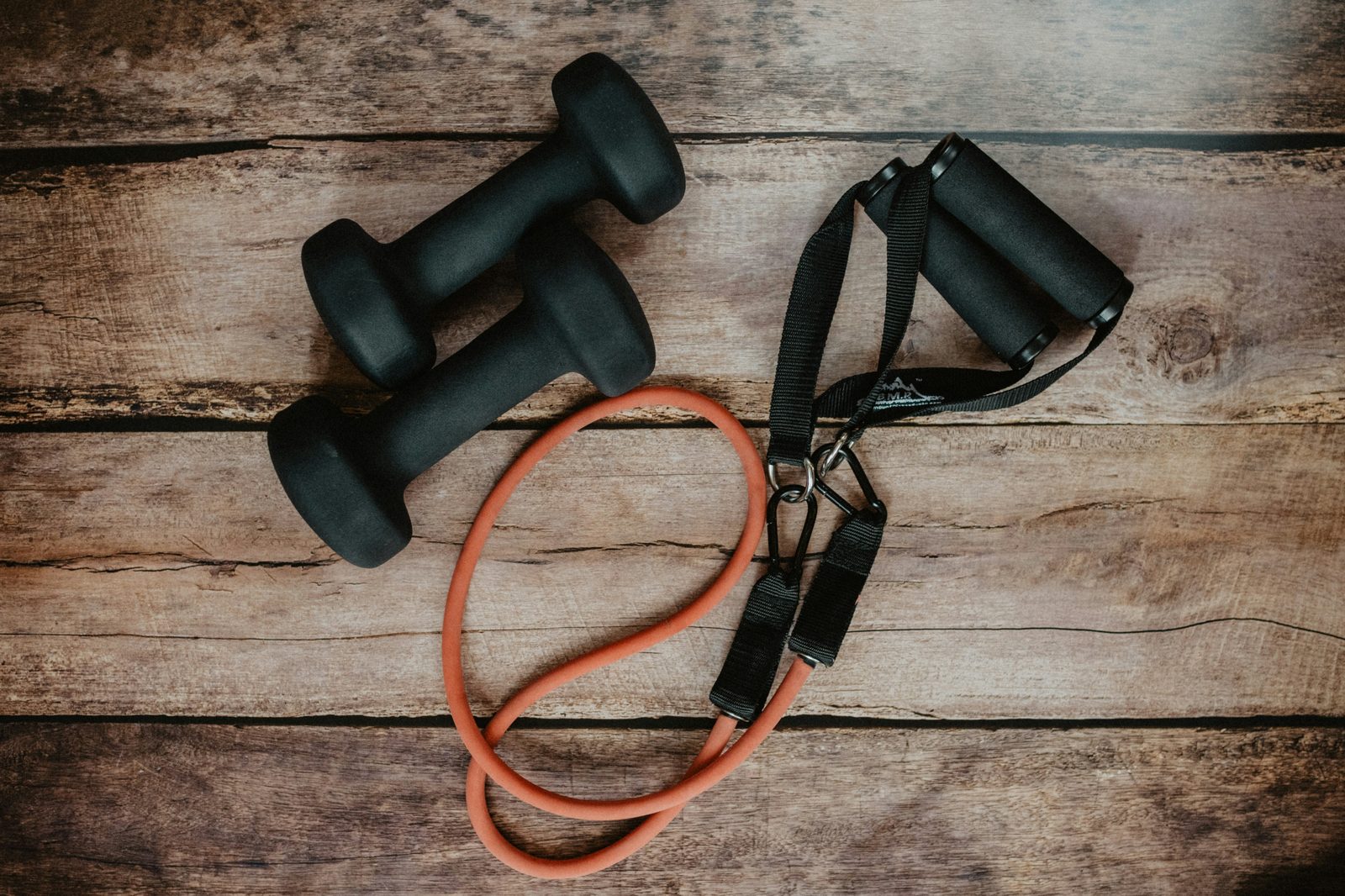
Walk into any gym and you'll see two distinct camps: people moving between barbells and dumbbells, and people working through a circuit of machines. Both build real strength and muscle — the actual question isn't which is "better" in the abstract, but which fits your current experience level, goals, and how much time you want to spend learning technique versus simply training.
What actually differs between them
Free weights (barbells, dumbbells, kettlebells) require you to control the weight through space in all directions, engaging stabilizer muscles throughout the movement to keep the weight balanced and on the correct path. Machines guide the weight along a fixed path, removing much of that stabilization demand and isolating the target muscle more directly, since the machine itself handles balance and trajectory.
Muscle growth: more similar than commonly assumed
Research comparing free weights and machines for muscle growth, when training volume and effort are matched, generally finds similar hypertrophy outcomes between the two. Muscles respond to mechanical tension and sufficient training volume regardless of whether that tension comes from a barbell or a machine — the equipment is a delivery mechanism for the training stimulus, not an independent variable that changes results dramatically on its own.
Where free weights have a genuine edge
Free weights demand more coordination, balance, and stabilizer muscle activation, which arguably transfers better to real-world movement patterns and athletic performance than a fixed machine path. They also allow more flexibility in movement patterns and range of motion tailored to individual body proportions, rather than a machine's one-size-fits-most fixed track, which may not suit everyone's joint angles equally well.
Where machines have a genuine edge
Machines offer a significantly lower barrier to entry — the fixed path removes much of the technique learning curve and injury risk that comes with stabilizing a free weight, particularly for complete beginners. This makes machines a practical, lower-risk way to build initial strength and confidence before adding the more technically demanding free weight movements. Machines also allow safer training to failure, since there's no risk of a barbell falling on you the way there might be with an unspotted free weight exercise.
Safety and injury risk
Machines are generally considered safer for unsupervised training, especially for beginners, precisely because the fixed path limits how the weight can move if form breaks down. Free weights carry more injury risk if performed with poor technique or excessive weight before proper stabilization strength has developed, though this risk is manageable with appropriate progression and, ideally, some coaching early on.
Practical training recommendations
Many well-designed programmes use both rather than treating this as an exclusive choice — machines for certain isolation movements or as a safer option when training alone without a spotter, free weights for compound movements where the stabilization demand and functional carryover are genuinely valuable. Complete beginners often benefit from spending initial weeks primarily on machines to build a strength base and body awareness, then gradually introducing free weight compound movements as confidence and basic strength develop.
Which should you choose?
If you're brand new to resistance training, starting with machines to build initial strength and confidence with lower injury risk is a reasonable, well-supported approach. If you have some training experience already, or specific performance goals beyond general muscle building, incorporating free weights for their stabilization and functional benefits is worth prioritising. For most people training consistently over the long term, a combination of both — rather than strict allegiance to one camp — tends to produce the most well-rounded results.
Frequently asked questions
Are machines less effective than free weights for building muscle?
Not necessarily — research generally shows similar muscle growth between free weights and machines when training volume and intensity are matched, since muscles respond to tension regardless of the equipment creating it.
Should complete beginners start with machines?
Many coaches recommend machines initially to build a foundation of strength and confidence with lower injury risk, before progressing to free weights as technique and body awareness develop over the following weeks.
Do free weights really build more functional strength?
Free weights require more stabilizer muscle activation and coordination, which arguably transfers better to real-world movements and athletic activities than the fixed, guided paths of machines.
Can I get a complete workout using only machines?
Yes — most commercial gyms have enough machine variety to train all major muscle groups effectively, though some specific movement patterns and functional carryover are harder to replicate without free weights.