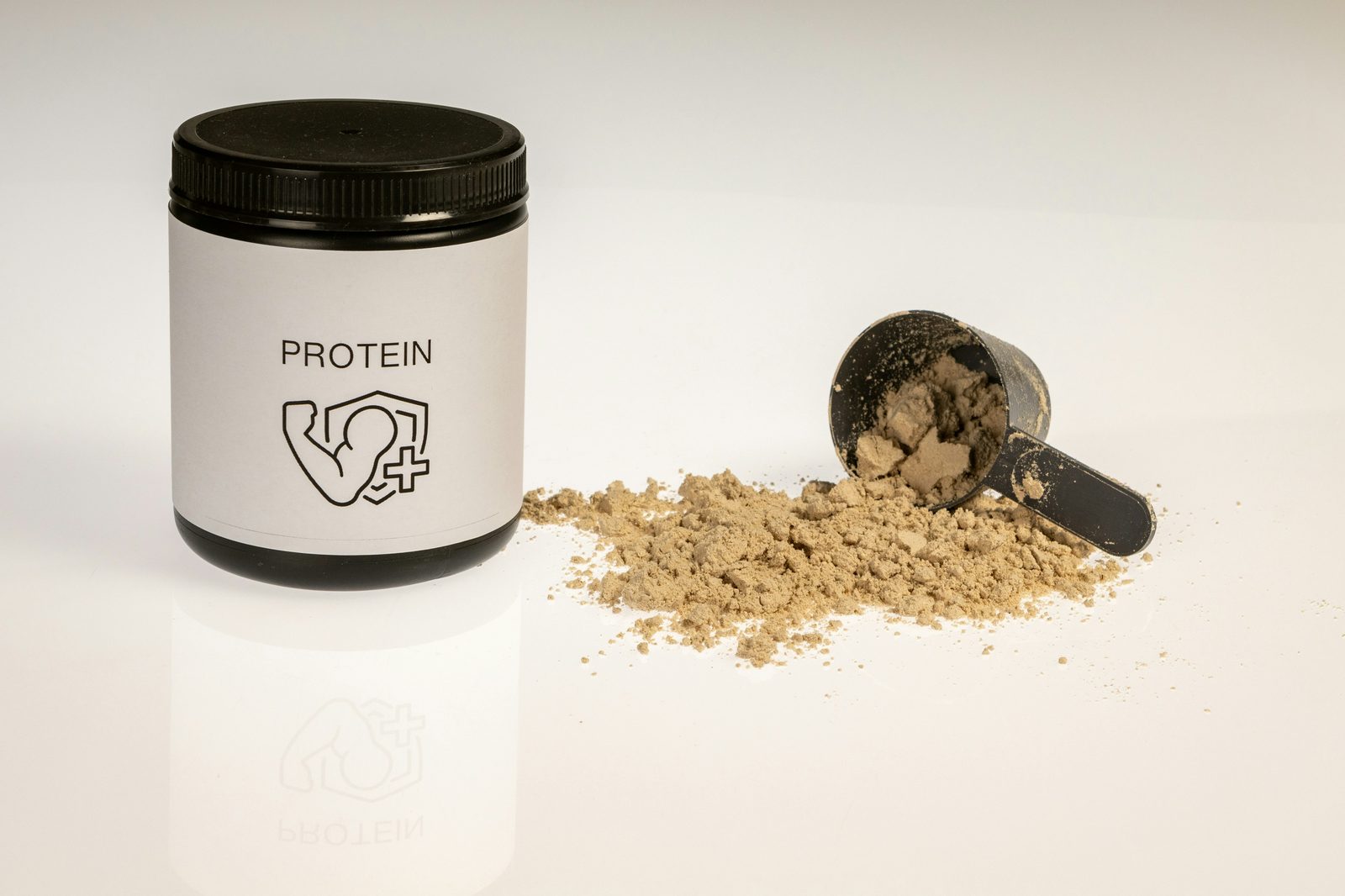
Whey and casein are both derived from milk, both deliver a complete amino acid profile, and both work — but they behave very differently once you swallow them. The difference comes down to one thing: how fast your body breaks them down. That single fact drives almost everything else in this comparison, from when to take each one to whether it's worth buying both.
Where they come from
Milk is roughly 80% casein and 20% whey by protein content. Both are simply byproducts of cheese-making, separated during the same process — whey is the liquid left behind, casein is the curd. Neither is synthetic or "processed" in the way the word gets used as a scare term; they're isolated and dried using filtration, similar in principle to how coffee is decaffeinated.
The core difference: digestion speed
Whey protein digests fast. A dose of whey isolate can raise blood amino acid levels within 30–45 minutes and largely clears the digestive system within about 2 hours. Casein forms a gel-like clot in the stomach on contact with acid, which slows its breakdown dramatically — amino acids trickle into the bloodstream over 6–8 hours rather than arriving all at once.
This isn't a minor technical detail — it's the entire reason both products exist as separate categories rather than one generic "milk protein powder."
Amino acid profile and leucine content
Both are complete proteins containing all nine essential amino acids, and both are rich in the branched-chain amino acids (BCAAs) that drive muscle protein synthesis. Whey typically has a slightly higher concentration of leucine — the specific amino acid that acts as the primary trigger for muscle building — at roughly 10–11% of total content versus casein's 8–9%. In practical terms, this difference is small enough that total protein intake across the day matters far more than this gap.
When each one makes sense
Whey: around training
The fast amino acid spike from whey lines up well with the post-workout window, when muscle tissue is primed to take up amino acids for repair. It's also easier to mix and digest without feeling heavy before a workout, which is why it's the default choice pre- and post-training for most people.
Casein: before bed or between meals
Casein's slow release is best suited to periods without food for several hours — most commonly right before sleep, when the body otherwise goes 7–9 hours without any protein intake. Some research on overnight muscle protein synthesis found a measurable, if modest, benefit to a pre-sleep casein dose compared to no protein at all. It's also a reasonable choice as a between-meal snack if you're trying to manage hunger, since the slow digestion tends to support satiety a bit longer than a fast-digesting alternative.
Does the timing actually matter that much?
Less than supplement marketing implies. The research on protein timing (sometimes called the "anabolic window") has shifted significantly over the past decade — earlier studies suggesting a narrow post-workout window for protein intake have been largely superseded by research showing that total daily protein intake and consistent distribution across meals matter far more than hitting a precise 30-minute post-workout target. If you're already eating adequate protein spread across 3-5 meals a day, swapping which specific powder you use at which specific time will not make or break your results.
Cost and practical considerations
Whey concentrate is generally the cheapest option per gram of protein, whey isolate costs somewhat more (less lactose and fat, more filtration), and micellar casein tends to be the priciest of the three due to a more involved production process. For most people on a budget, whey concentrate covers the majority of use cases perfectly well, and the marginal benefit of casein specifically is more about convenience and satiety than a dramatic performance difference.
Lactose and digestive tolerance
Both are milk-derived and can contain some residual lactose, though whey isolate and micellar casein are generally lower in lactose than whey concentrate due to additional filtration. If you're lactose intolerant, check the label for isolate-grade products, or consider a plant-based alternative if dairy-derived protein consistently causes discomfort regardless of processing grade.
The practical verdict
Neither is objectively "better" — they're suited to different moments in the day rather than competing head-to-head. A sensible default for most people: whey around workouts for its speed and mixability, casein before bed if you want a slow-release option to cover the overnight fast, and don't overthink it beyond that. If you'd rather not manage two separate tubs, a blended protein powder combining both is a completely reasonable single-product solution.
Frequently asked questions
Can I mix whey and casein together?
Yes — many blended protein powders combine both deliberately, giving a fast initial release from whey plus a slower tail from casein. There's no downside to mixing them yourself if you prefer separate tubs.
Does casein really work better before bed?
Research shows casein before sleep modestly increases overnight muscle protein synthesis compared to no protein, but the effect is small and total daily protein intake matters far more than this specific timing choice.
Is one better for weight loss than the other?
Casein's slower digestion may support satiety slightly longer, which some people find useful between meals, but for weight loss, total calories and total protein matter more than which type you choose.
Which one is better for lactose intolerance?
Neither is inherently better — whey isolate and casein are both derived from milk and can contain trace lactose. Whey protein isolate typically has less lactose than concentrate, so check the label if sensitive.